

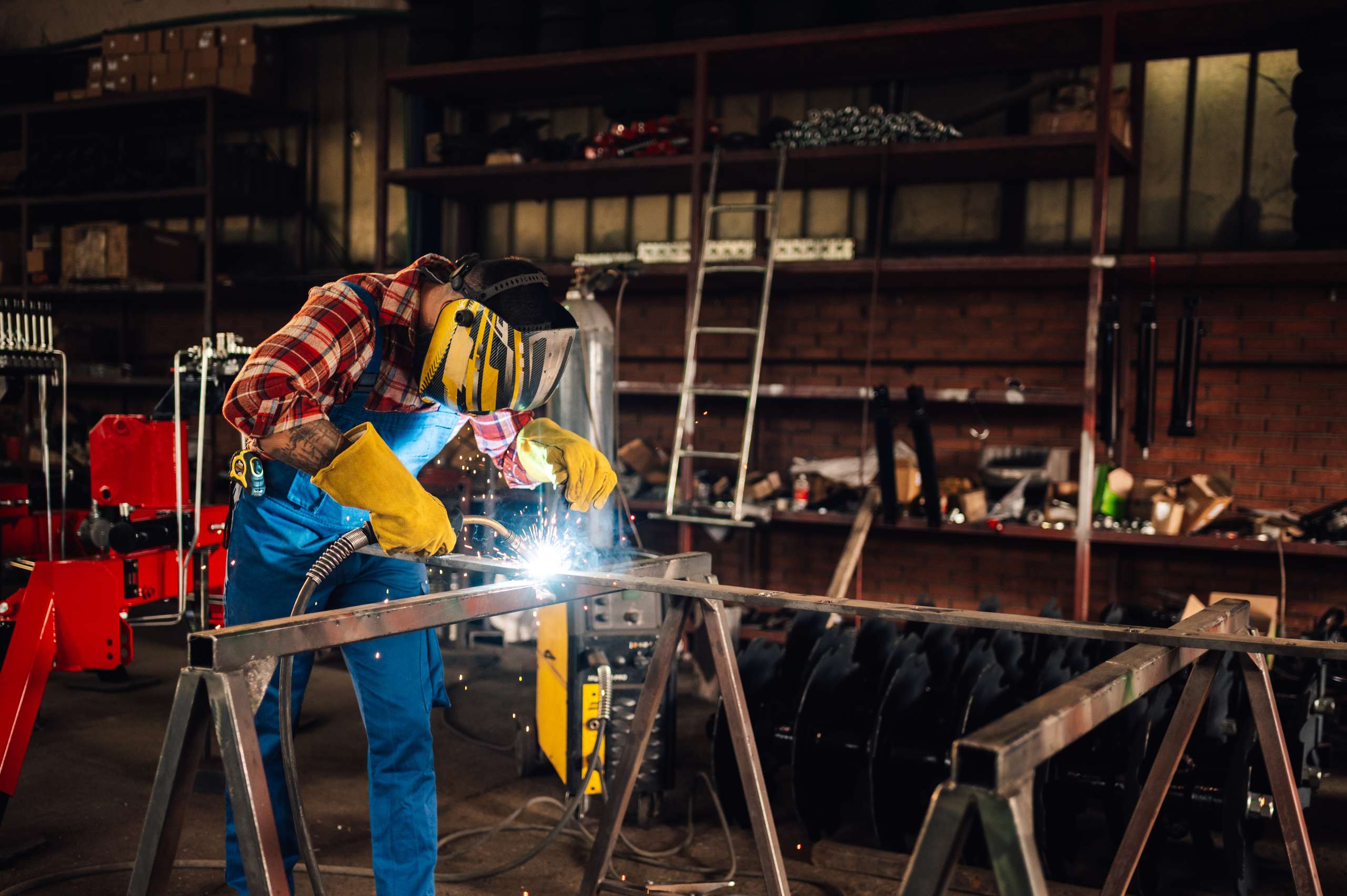
The puddle is the hub of the welding universe, but it is often viewed as an uncontrollable force that one has to follow. The puddle reacts instantly to heat, orientation, and motion. Control is achieved by altering those variables before the puddle does something wrong. Stop looking at the glare of the arc and look just behind it. Here, the liquid metal pools up into a little reservoir. From this perspective, you can see how the metal is flowing and if it is penetrating the joint like it should.
People often make the mistake of rushing when they see the puddle. The temptation is to keep going so you don’t burn through, but this speed doesn’t allow the puddle to tie in to the other side of the joint, leaving you with a bead that is on top of the joint like a little raised ridge. This type of bead is weak, but it can look nice and neat. Taking the time to allow the puddle to reach both sides of the joint gives you a “tie-in” that you can see, and if you are in danger of burn through you can push the joint forward a little and wait a second or two until the weld metal solidifies.
Angle is just as important as rate. If you tilt the electrode or torch too much, you push the puddle forward too much. If you tilt too little or straighten it out, you build too much heat in one area. The goal is to have just enough tilt to help push the puddle forward, but not so much that you push it away. If you are new to this process, you will tend to react by changing your angle drastically if you have a problem. In most cases, this makes things worse. Gradual change, so slight that it can hardly be seen by others, will give you better and more consistent results because the puddle is reacting to minute adjustments in the heat input.
A 15-minute exercise on flat scrap will raise your puddle consciousness. Deposit a short bead and stop every few seconds to witness the puddle cooling and shrinking. Then repeat, this time modifying the speed of travel, and note how the puddle responds. Both of these tests illustrate cause and effect more thoroughly than welding a long joint with your mind on autopilot. It’s essential to learn to read the puddle before a situation becomes a crisis.
It’s often when the puddle starts to get wonky that you think you need to mess with your machine’s settings, but more often, it’s just a matter of relaxing your hands, straightening out your arms, or deepening your breath. In most cases, your placement stabilizes the puddle again almost immediately. As you watch the puddle enough times and ease the tension out of your hands, it stops seeming like a maddening dance partner and becomes a relatively predictable mass of molten metal that you can actually control, which makes your welds go from frenetic to deliberate.