

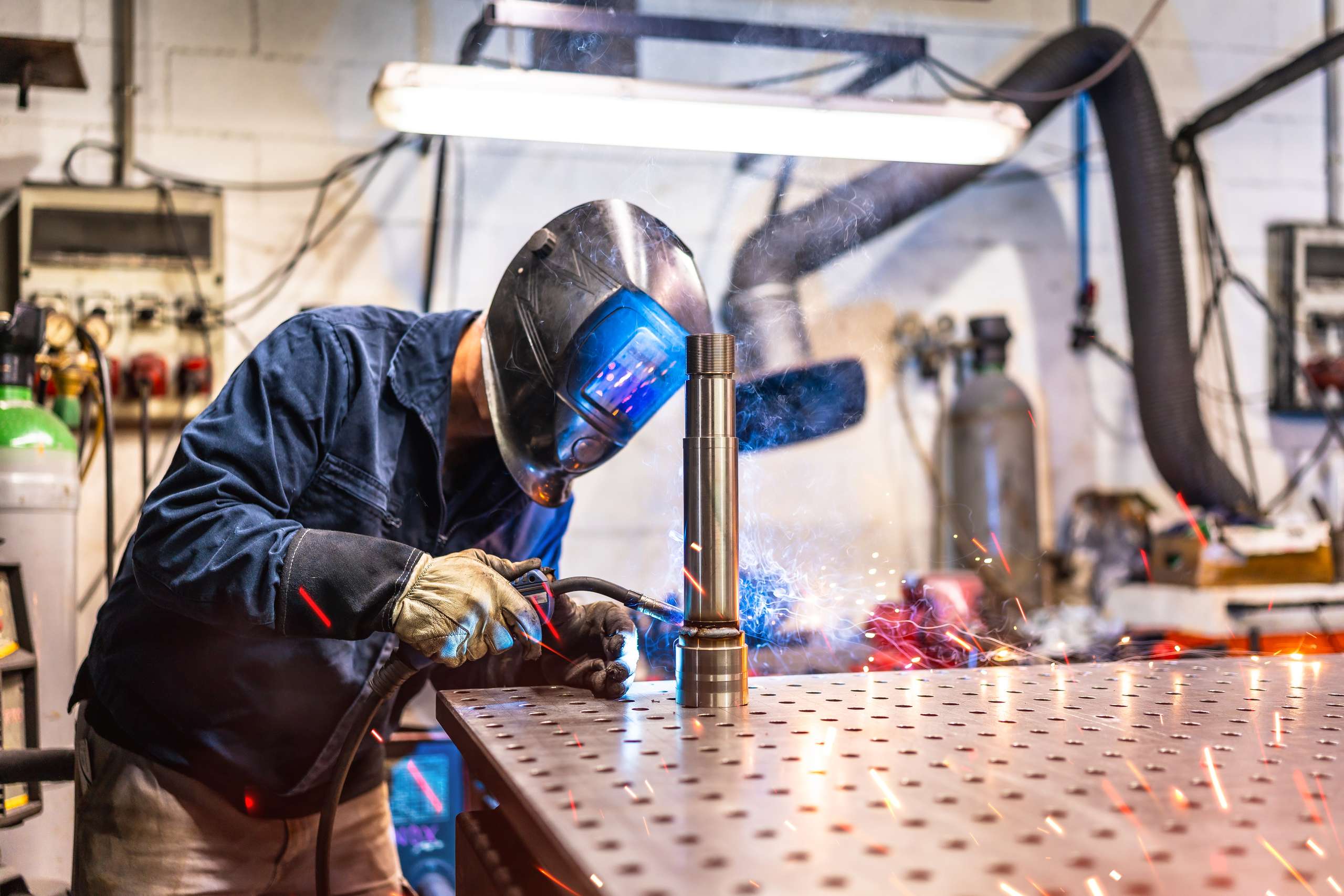
The instant the arc is struck can be intimidating: there is a bright flash of light, a loud crackle of electricity, the metal crackles, and the puddle seems to race across the metal. At this point do not worry about the appearance of the bead, worry about being steady. If you are a beginner, your goal should be to achieve a steady, peaceful striking of the arc, rather than trying to lay a nice bead. Before striking the arc, adjust your body positioning so that your forearms are resting comfortably and the helmet can come down without requiring you to change your stance. Performing a few dry runs can help with this: with the power off, run the electrode or torch along the joint to be welded. This gets your muscles used to the motion, so that when you strike the arc for real it will not seem so frantic.
The incorrect technique is a sort of stabbing motion, as if the electrode were a match being forced to light. This motion usually ends in the tip sticking to the metal. When the electrode finally comes unstuck, it will jerk wildly, making it difficult to control. The proper motion is more of a glancing blow. Just brush the electrode against the metal and then pull up enough to keep from sticking. If the tip does stick, don’t apply more pressure or twist and yank the electrode. This will damage the tip and make the electrode wiggle all over on the next try. Simply let off the pressure and try again with a clean tip.
With the arc established, focus on the puddle, not the glare. Newbies tend to watch the glare of the arc and it is hard to tell where the metal is actually going. Observe the edges of the puddle to see if you have enough heat and if you are going too fast or too slow. If it looks tall and ropey, you are probably going too slow. If it looks too thin and splattered, you are probably going too fast. Adjusting the travel speed by barely a few millimeters per second makes a huge difference.
I found that a 15 minute session is incredibly valuable when it is more focused on repetition than duration. I would begin by burning circles on junk material, not caring if the beads were good, just trying to get it to start and restart, after a mistake, with as little time as possible. I would then weld straight lines about a finger width long before my hand got tired. The act of restarting frequently is valuable because you have to start in the right place again. It also helps you avoid burning up the material, and keeps you from hurrying.
If you feel yourself getting frustrated, it’s probably because you’re holding too much tension in your hands and shoulders. It’s a good idea to stop and flap your arms and adjust your posture. It’s better to slow down and make adjustments than it is to keep going and risk losing control of your weld. Welding is a process that requires patience and fine-tuning, even veteran fabricators will tell you that they begin slowly and take deep breaths to maintain control. After several short welds, the terrifying flash of the arc becomes familiar and you start to realize that it isn’t a scary beast that you can’t tame.